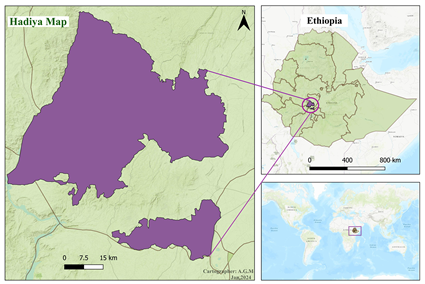

The Hadiyya people live in southern Ethiopia and speak Hadiyyisa, a Highland East Cushitic language. They trace their heritage to the once-powerful Hadiya Sultanate, a Muslim principality mentioned in Ethiopian chronicles as early as the 13th century. Over several centuries, political upheaval, military pressure from neighboring powers, and the expansion of the Oromo contributed to the fragmentation of this sultanate into multiple related groups that now bear distinct names and identities.
Although many Hadiyya communities were historically Islamic or practitioners of indigenous religious systems (such as Fandaanano), encounters with imperial expansion in the 19th century and the presence of Protestant missionaries in the early 20th century reshaped religious and social life. Today, the Hadiyya maintain a strong sense of common ancestry even though they are culturally diverse, tracing their origin stories to ancient dynasties and the memory of their former sultanate.
Most Hadiyya families are farmers who cultivate enset (false banana), barley, wheat, maize, and vegetables on terraced highland fields. Livestock such as cattle, sheep, and goats hold economic and social importance, providing dairy products, manure for farming, and symbolic value in community life. Extended families often live together or in close proximity, reinforcing generational ties and ensuring cooperative labor during planting and harvest seasons.
Markets provide a hub for trade in agricultural produce, woven cloth, pottery, and household items. Social life is enriched through storytelling, traditional songs, and seasonal gatherings that bring together clans and neighbors. Celebrations often mark life transitions—birth, marriage, and community festivals—and include feasting, dancing, and the exchange of gifts. In rural areas, community cooperation remains central to survival, with neighbors assisting one another in farming, house-building, and care for vulnerable families.
Historically, the Hadiyya practiced a blend of Islam and indigenous beliefs, with spiritual traditions emphasizing ancestors, ritual specialists, and community-centered ceremonies. Over time, Christianity—especially Protestant expressions—became a significant force, reshaping moral, social, and family life. Today, many Hadiyya participate actively in church worship, prayer gatherings, and Bible study, while others continue in Islamic traditions or retain elements of their ancestral systems.
Economic pressures, soil depletion, and limited access to modern agricultural tools place stress on rural households. Education access varies, especially for girls, and some communities face challenges related to healthcare availability, clean water, and transportation. Social transitions also affect family stability as youth navigate modern influences, migration, and shifting cultural expectations.
Spiritually, the Hadiyya benefit from stronger discipleship, leadership development, and faithful teaching that anchors families in Christ through both blessings and hardships. Churches with a clear vision for outreach can help strengthen unity and encourage mission-minded living among all generations.
Pray that the Holy Spirit will strengthen Hadiyya believers with wisdom, perseverance, and a deep love for Jesus Christ.
Pray that Christian families will be equipped to follow Christ faithfully amid economic pressures and cultural change.
Pray that local churches will grow in unity, biblical teaching, and bold witness to their neighbors.
Because the gospel has a significant presence among the Hadiyya, pray that believers will grow in spiritual maturity and join the global discipleship force, carrying the compassion of Jesus to peoples with little or no access to the good news.
Scripture Prayers for the Hadiyya in Ethiopia.
https://en.wikipedia.org/wiki/Hadiya_people
https://www.101lasttribes.com/tribes/hadiya.html
https://hadiyajourney.com/a-history-of-the-hadiya-in-southern-ethiopia/
https://everything.explained.today/Hadiya_people/
| Profile Source: Joshua Project |